Ceiling Leak Water Damage in Piscataway
A ceiling that drips or bows needs space beneath it kept clear. Piscataway ceiling restoration investigates the area above the damage before deciding how the wet assembly can be opened and dried.
(888) 471-9821Discuss overhead water damage
How the team handles ceiling leak water damage
Rapid local response
The response team treats active water as urgent and asks about the source, electrical hazards and occupied rooms. Dispatch planning starts with safe access and a clear description of the loss.
IICRC S500 drying standard
The drying team sets a moisture goal for each material, then balances extraction, airflow and dehumidification. Daily readings show where equipment needs adjustment and when drying can finish.
Claim-ready documentation
The restoration contractor records the water source, affected materials and work sequence. Photographs and moisture records explain the scope to the property owner and insurer without promising a coverage decision.
Local water experts
The mitigation team checks the actual building and follows water beyond the visible puddle. Adjoining rooms, floor edges and concealed cavities receive attention before finishes close over the structure.
First steps for ceiling leak water damage
Leave the overhead area empty
Keep people out from beneath a bowed ceiling or wet fixture. Avoid reaching upward to collect water or move attached material while its condition is uncertain.
Record changes from a doorway
Photograph spreading discoloration, dripping or sagging from a safe position. Note whether water appears when an upstairs fixture operates or after rain reaches the building.
Arrange access to connected spaces
Contact building management where another unit or locked service area sits above the damage. Source investigation may depend on entry beyond the room with the stain.
Describe vulnerable room contents
Mention furnishings, electronics or decorative finishes below the affected ceiling. Protection and movement need planning before controlled access exposes wet materials or releases debris into the room.
Birchview Gardens is an apartment setting in the township. When water appears on a ceiling in a shared building, access above the room may be as important as access below it. The assessment needs to identify the source area and the wet assembly before a cosmetic repair closes the visible opening.
What does ceiling leak water damage cost in Piscataway, NJ?
Ceiling restoration costs in Piscataway reflect the affected overhead area, access above it and any spread down walls or into adjoining rooms. These planning ranges cover interior damage work. Source repair, electrical work and replacement decoration should be distinguished from removal and drying in the estimate.
Localized ceiling
- Small overhead footprint
- Accessible cavity check
- Limited finish removal
Ceiling and walls
- Connected partition moisture
- More access openings
- Broader drying arrangement
Multiple rooms
- Extended overhead spread
- Several inspection areas
- Coordinated contents protection
Typical ranges depend on water category, wet area, access and material layers. The inspection defines the scope. Compare inputs with the water damage cost calculator.
The ceiling leak water damage process
Assess the space beneath damage
The first assessment considers loose ceiling material, fixtures and room access. A protected work area is established before anyone opens the affected overhead assembly or moves contents below it.
Connect the stain with its source
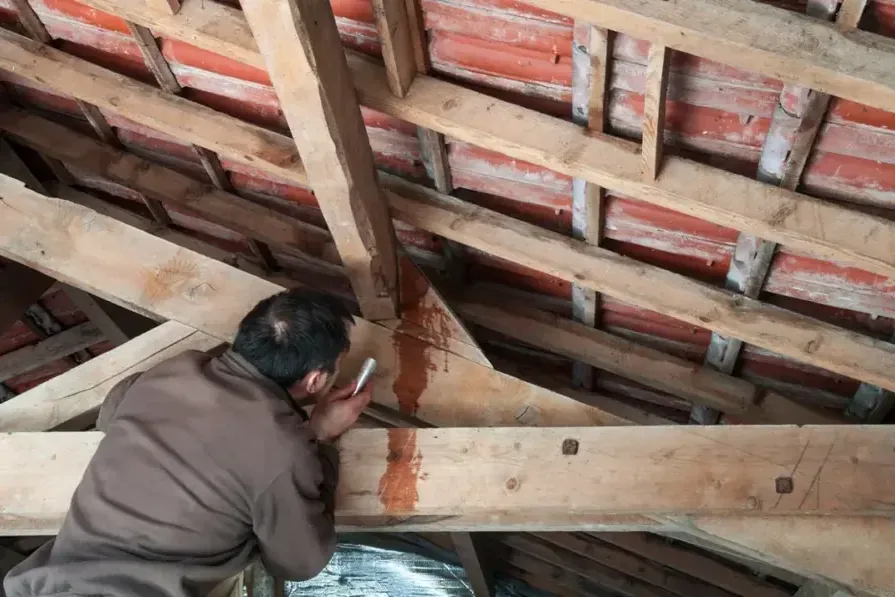
Inspection above and around the mark helps locate the water route. Management or repair trades may need to provide access to another room or service space during this stage.
Open only the needed assembly
Damaged material and barriers to drying are identified for controlled removal. The scope explains which finishes can remain and how exposed layers will be reached for moisture checks.
Verify conditions before ceiling repairs
Measurements follow the retained overhead materials and adjoining walls. The handoff identifies completed drying, unresolved source tasks and the patching or replacement needed after the restoration work ends.
Give the overhead damage a clear boundary
A bulging ceiling can hold water or contain weakened material. Keep furniture and people away from the space beneath it when this can be done safely. Do not puncture the finish or remove a wet light fixture. Those actions can release water unexpectedly or expose electrical components within an already damaged assembly.
In Society Hill, New Market and other township areas, room layout guides the inspection. A stain beside a wall may connect to wet material inside the partition, while water near a fixture may have traveled across the ceiling cavity. The visible shape helps choose inspection points but does not replace a assessment above it.
An overhead leak needs access to the water path as well as the stained room. Describe the ceiling shape, active dripping and the space above it when calling.
(888) 471-9821Assess the ceiling conditionCoordinate entry above and beside the room
An upstairs bathroom, appliance space or pipe route may need access during source investigation. Building management can help arrange that entry when different occupants control connected spaces. The restoration scope should distinguish the leak repair from removal of damaged ceiling material and the drying needed below the original water source.
- Document the stain boundary and any change in the ceiling shape.
- Identify rooms above the damage that may need coordinated inspection.
- Keep dry pathways clear of furnishings moved away from overhead hazards.
Once safe access is established, affected insulation and ceiling backing can be examined. Materials that are loose, physically damaged or preventing effective drying may need controlled removal. The reason for an opening should be explained before work begins, along with how adjacent furnishings and retained finishes will be protected from falling debris.
Assess the cavity before closing the ceiling
The exposed face of a ceiling can dry while framing or insulation above it remains wet. Monitoring points should therefore match the materials reached by water. Structural drying work can include controlled airflow into accessible cavities and humidity management in the affected room, with adjustments based on repeat observations.
Closing the opening belongs after the source is resolved and the retained layers are suitable for repair. The completion record should show what was removed, which materials remained and where moisture was checked. Paint, patching and fixture replacement may follow as separate tasks, with their extent clearly described before the room returns to normal use.
Ceiling leak water damage in Piscataway
Ceiling damage assessments in Piscataway include occupied homes and shared buildings. Mention whether the space above the stain is accessible, who controls that access and whether water has reached nearby walls or fixtures.
The same service nearby: ceiling leak water damage in Somerset, Middlesex, South Plainfield.
An overhead leak needs access to the water path as well as the stained room. Describe the ceiling shape, active dripping and the space above it when calling. Call (888) 471-9821.
Related water damage services in Piscataway

Ceiling Leak Water Damage questions in Piscataway, NJ
Discuss the wet area
An overhead leak needs access to the water path as well as the stained room. Describe the ceiling shape, active dripping and the space above it when calling.
(888) 471-9821Assess the ceiling conditionShould a swollen ceiling be punctured to drain it?
A resident should keep clear instead of opening an unstable overhead finish. Trapped water can release suddenly, and electrical components may be present above the surface. Describe the bulge and any active dripping so access and controlled removal can be evaluated as part of the restoration assessment.
Why does another apartment need inspection?
The water source or a wet section of the assembly may be accessible only from a connected unit. Management can coordinate permission and timing. The purpose is to locate and stop the source while understanding the full damage path, including materials shared between the room above and the ceiling below.
Can the stain dry without opening the ceiling?
Some limited damage may be assessed through existing access, while other assemblies trap moisture behind the finish. The material condition, insulation and source determine the approach. An opening should have a clear purpose, such as removing damaged material, inspecting concealed water or allowing effective drying of retained layers.
Does the lowest drip identify the source?
Water can travel across framing or along a concealed surface before it drips. The lowest visible point marks an exit, which may be away from the original leak. Inspection should consider the rooms and services above the damage rather than assuming the source sits directly over the puddle.
What happens to a wet ceiling light?
Electrical equipment affected by water needs evaluation by the appropriate qualified trade. Avoid operating or handling the fixture while its condition is uncertain. Restoration work around it should be coordinated with that assessment so removal and drying do not create contact with unsafe components inside the ceiling assembly.
When can furniture return beneath the repaired area?
The work area must be safe, with unstable material addressed and the drying or repair arrangement no longer requiring the space. The completion discussion should identify remaining ceiling work and any restrictions around equipment. Furniture placement can then follow the actual room condition instead of the disappearance of visible dripping.
Resolve the wet layers above the room
A careful access plan connects source investigation, controlled ceiling removal and drying before the opening is ready for finish repairs.
(888) 471-9821Arrange overhead damage assessment